
Editorial
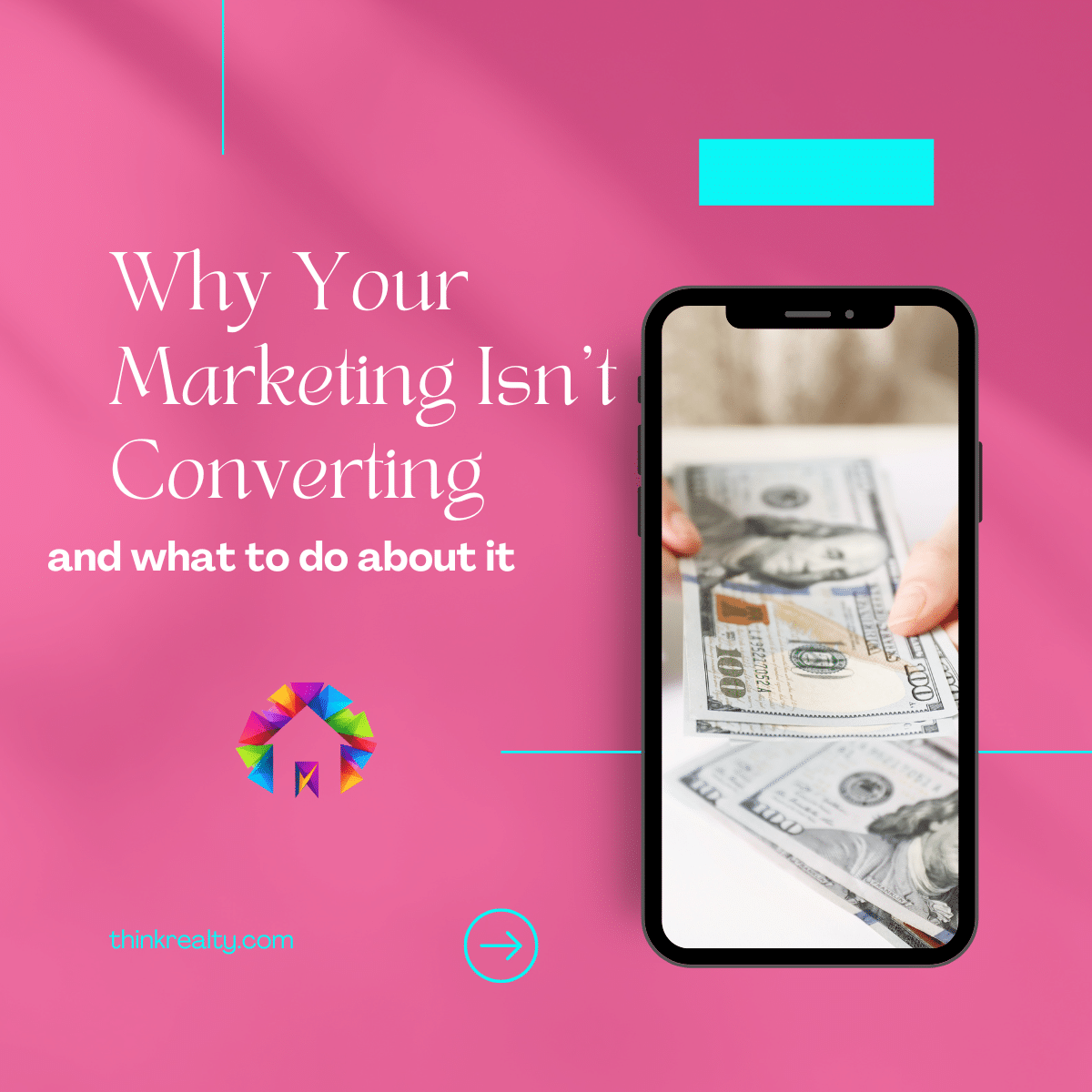
Why Your Marketing
Is Not Converting
and What To Do About It
You are posting consistently. You are running ads. You are showing up. And yet the registrations, the inquiries, the sales are not coming in the way they should. Most conversion problems are fixable once you know where to look.
Your message explains what you do, not what changes for the buyer
Most marketing leads with credentials, features, and descriptions. “We offer X. We specialize in Y. We have Z years of experience.” The problem is that none of that answers the only question your audience is asking: what does my life look like after I work with you?
Reframe every piece of marketing around the transformation, not the transaction. Describe the before and the after. Speak to the frustration your audience has right now, then paint the picture of where they want to be. The message that connects is the one that makes someone feel seen before it makes them feel sold to.
There is no middle layer between your content and your offer
One of the most common funnel mistakes is going straight from awareness to ask. Someone sees a post, clicks a link, lands on a page and either buys or leaves. For low-ticket items under $100, that can work. For anything above that, most people need more than one touchpoint before they are ready to commit.
Build a nurture sequence: 3 to 7 emails that build the case between first contact and the offer. Each email should do one job: tell a story, address an objection, provide proof, or deepen urgency. The sequence turns a cold click into a warm lead, and a warm lead into a buyer.
The landing page does not handle objections
Most landing pages present an offer without anticipating resistance. But every prospect has objections before they buy, and if the page does not answer them, the person leaves and does not come back. Common objections include: “Is this the right time?”, “Do I have what it takes?”, and “Is this person credible?”
Address each objection directly on the page, not defensively, but confidently. Use testimonials that mirror the doubts your audience has. Include a clear breakdown of what is included and what changes. Make the guarantee or risk-reversal visible. A landing page that speaks to objections converts at a significantly higher rate than one that only presents the offer.
You are reaching the wrong audience
It is possible to have the right message, the right offer, and the right funnel and still not convert, because the people seeing your content are not the people it is built for. Broad audiences, generic hashtags, and untargeted ad campaigns can generate impressions and even engagement without ever reaching a buyer-ready audience.
Define your ideal customer not just by demographics but by the specific problem they have right now, the language they use to describe it, and where they spend their time online. A smaller, more defined audience that recognizes itself in your message will always outperform a large, generic one.
Deliverability issues are silently killing your reach
This one is invisible, which makes it dangerous. If a significant portion of your list is on Microsoft-based addresses like Outlook, Hotmail, or MSN, there is a real chance your emails are bouncing or landing in spam without you knowing it. The same applies to social media algorithms suppressing content that does not follow platform preferences.
Monitor your bounce rates by domain, maintain a clean list, and ensure your sending domain has proper authentication records in place. On the social side, prioritize content formats the platform currently rewards: short video, carousels, and direct engagement, over formats it deprioritizes.
There is no urgency and no reason to act now
People are busy and naturally default to “I will think about it.” Without a reason to act now, most prospects do not act at all. This is true even when the offer is genuinely valuable and the prospect is genuinely interested. Urgency is not about pressure or manipulation. It is about giving someone who already wants to move a reason to stop waiting.
Build real urgency into every offer. Enrollment deadlines, cohort-based programs, limited seating, price increases, or bonus content that expires all create a natural reason to decide. Pair urgency with a clear call to action that tells the prospect exactly what to do next. Ambiguity kills conversions. Clarity closes them.
The common thread
Every conversion problem on this list comes back to the same root cause: a gap between what you are putting out and what your audience needs to hear in order to take the next step. The fix is never just more content or more spend. It is more alignment between your message and your market, between your funnel and your offer, and between the problem your audience has and the solution you are presenting.
Fix the alignment and the conversions follow.










0 Comments